3d Sublimation Tumbler Wrap Landscape: Integrating Nature Illustrations into Your Production Workflow
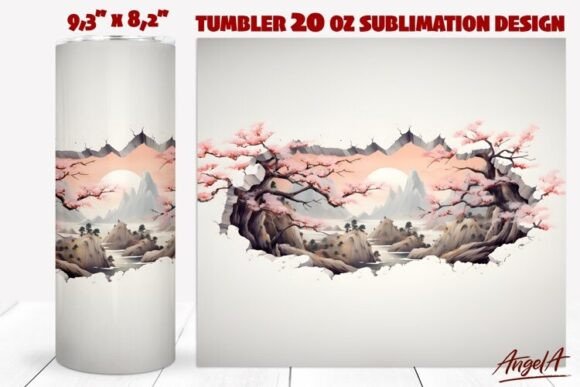
In the competitive world of custom merchandise, the difference between a product that sells and one that sits on a shelf often comes down to design fidelity and production efficiency. For creators, small business owners, and marketing professionals, understanding how to implement high-quality assets like a 3d Sublimation Tumbler Wrap Landscape is essential. This specific design category, featuring Japanese landscape illustrations with mountains and sakura pink flowers emerging from a broken wall, represents more than just aesthetic appeal. It is a case study in how digital assets must be prepared, managed, and executed within a broader manufacturing workflow.
When you acquire a digital asset for sublimation printing, you are not just buying an image; you are integrating a component into a supply chain. The process begins long before the heat press is turned on. It starts with file verification, compatibility checks, and strategic planning. By treating the acquisition of a 3D sublimation wrap as a structured task within your project management system, you reduce errors, minimize waste, and ensure consistent quality across every unit produced.
Understanding the Asset Specifications and Quality Control
The foundation of any successful sublimation project is the source file. In this context, the 3d Sublimation Tumbler Wrap Landscape is provided as a PNG file with specific technical requirements. Understanding these specifications is critical for maintaining workflow integrity. The file dimensions are listed as 9.3 by 8.2 inches, with a resolution of 300 DPI (dots per inch). This high resolution is non-negotiable for professional results. Printing at lower resolutions leads to pixelation, which undermines the perceived value of the final product.
A crucial detail in this workflow is the background structure. The file comes with a striped background that is not transparent. For those new to sublimation, this might seem counterintuitive, as many graphic design tasks rely on transparent layers. However, in full-wrap sublimation for 20 oz tumblers, the design must cover the entire surface area without gaps. The striped background serves as a placeholder or a specific design element that ensures no white spaces appear after pressing. Before beginning production, verify that your design software can handle this layer structure. If your workflow requires isolating specific elements, such as the sakura pink flowers or the mountain illustration, you will need to use masking tools carefully to avoid disrupting the seamless nature of the wrap.
Quality control at this stage prevents downstream issues. Open the file in your preferred editing software and check for color consistency. Sublimation ink behaves differently on paper than it does on polyester-coated surfaces. The vibrant pinks of the sakura and the deep tones of the Japanese mountains may shift during the heating process. Anticipating this shift allows you to make minor adjustments in brightness or contrast before printing, ensuring the final output matches your visual expectations.
Integrating the Design into Your Creative and Business Process
Once the asset is verified, it must be integrated into your broader creative or business workflow. For entrepreneurs and marketers, this design fits into several potential use cases. It can be part of a seasonal launch, a niche-specific collection targeting fans of Japanese culture, or a premium offering in a general lifestyle brand. The key is alignment. Does this 3d Sublimation Tumbler Wrap Landscape align with your current marketing calendar? Is it being used to test a new audience segment?
From a practical implementation standpoint, organize your digital assets systematically. Store the PNG file in a dedicated folder alongside your production logs, customer orders, and inventory records. This organization facilitates quick retrieval and reduces the cognitive load when managing multiple designs. If you are working with a team, ensure that everyone has access to the correct version of the file. Version control is vital; using an outdated or corrupted file can lead to costly reprints and delayed shipments.
Consider the scalability of this design. While the current dimensions fit a standard 20 oz tumbler, can the elements be adapted for other products? The mountain illustration and broken wall motif could potentially be resized for smaller items like coasters or larger items like travel mugs, provided the resolution remains sufficient. Thinking ahead about cross-product application maximizes the return on investment for each design asset you purchase or create.
Preparation and Compatibility in the Production Phase
Transitioning from digital file to physical product requires careful preparation. The sublimation process involves transferring ink from special paper to a polymer-coated substrate using heat and pressure. For the 3d Sublimation Tumbler Wrap Landscape, this means ensuring your printer is calibrated correctly. Use high-quality sublimation paper that holds ink without bleeding. Bleeding can blur the fine details of the sakura flowers and the texture of the broken wall, diminishing the 3D effect that makes the design stand out.
Compatibility extends to the hardware as well. Ensure your heat press or convection oven is capable of maintaining a consistent temperature throughout the cycle. Uneven heating can cause banding or color variation, particularly in large solid areas like the sky or mountain bases. Test prints are an essential part of this phase. Run a single unit through the entire process before committing to a bulk order. This test allows you to verify color accuracy, alignment, and durability.
During the wrapping process, precision is key. The 9.3 x 8.2 inch dimensions must align perfectly with the tumbler’s surface. Use jigs or templates to secure the paper in place. Any slippage during the pressing phase will result in ghosting or misaligned patterns. The "broken wall" element of the design requires particular attention; if the wrap shifts, the illusion of depth and structure will be lost, turning a sophisticated illustration into a disjointed image.
Long-Term Use and Workflow Optimization
Efficiency in sublimation is not just about speed; it is about consistency and repeatability. Once you have successfully produced units using the 3d Sublimation Tumbler Wrap Landscape, document the process. Record the time, temperature, and pressure settings that yielded the best results. Note any specific quirks related to this design, such as how the pink hues react to different cooling methods. This documentation becomes a valuable resource for training new staff or refining your own techniques over time.
Feedback loops are also critical. Monitor customer reactions to the design. Are they commenting on the clarity of the mountains? Do they appreciate the unique sakura motif? Use this feedback to inform future design choices. If this landscape theme performs well, consider expanding the collection with similar nature-inspired wraps. Conversely, if there are complaints about durability or color fading, revisit your material sourcing and pressing parameters.
Furthermore, consider the environmental and operational sustainability of your workflow. Sublimation produces minimal waste compared to other printing methods, but inefficient practices can still lead to material loss. By optimizing your layout and minimizing test prints through rigorous pre-flight checks, you reduce both cost and environmental impact. This approach resonates with modern consumers who value responsible business practices.
Troubleshooting and Support Integration
Even with meticulous planning, issues can arise. Perhaps the colors appear dull, or the wrap does not adhere properly. In such cases, having a support system in place is invaluable. The provider of this design notes that if you encounter problems, you can reach out for assistance. Integrating this support channel into your workflow means knowing when to pause production and seek expert advice rather than guessing solutions that may worsen the issue.
Common issues might include printer head clogs, incorrect ICC profiles, or humidity affecting the paper. Keep a troubleshooting checklist handy. Verify your printer maintenance schedule, check your room’s humidity levels, and ensure your ICC profiles match your specific ink and paper combination. These small adjustments often resolve major quality issues without requiring significant downtime.
Ultimately, the successful use of a 3d Sublimation Tumbler Wrap Landscape depends on viewing it as part of a holistic system. From the initial download of the 300 DPI PNG to the final quality inspection of the cooled tumbler, every step matters. By focusing on preparation, compatibility, and continuous improvement, you transform a simple digital file into a high-value product that meets the demands of discerning customers. This methodical approach not only enhances product quality but also builds a reputation for reliability and professionalism in your market.