3D White Horse Group Tumbler Wrap Design: Elevating Digital Sublimation Art
In the rapidly evolving landscape of digital crafting and sublimation printing, the demand for high-quality, unique designs has never been higher. Among the myriad of options available to creators, the 3D White Horse Group Tumbler Wrap Design stands out as a compelling example of how modern technology intersects with artistic expression. This specific design is not merely a static image; it represents a shift in how digital assets are created, refined, and utilized by professionals and hobbyists alike. By combining the generative power of artificial intelligence with the precise editorial control of Adobe Photoshop, this listing offers a product that bridges the gap between automated creation and human curation.
For entrepreneurs, small business owners, and creative freelancers, understanding the value of such assets is crucial. The market for personalized drinkware has expanded significantly, driven by consumer desire for unique, aesthetically pleasing items that reflect individual style. A tumbler wrap is no longer just a functional label; it is a canvas for art. The 3D White Horse Group Tumbler Wrap Design caters to this need by providing a visually striking motif that captures attention while maintaining the technical standards required for professional-grade printing.
The Evolution of AI-Assisted Design in Crafting
The creation process behind this design highlights a significant trend in the digital art world: the hybrid workflow. Initially crafted through AI generation, the base image leverages complex algorithms to produce intricate details and dynamic compositions that might take hours to sketch manually. However, raw AI output often lacks the precision required for commercial printing. This is where the meticulous editing and refining in Photoshop become indispensable. By manually adjusting elements, correcting artifacts, and ensuring color consistency, the designer transforms a generated concept into a polished, production-ready asset.
This approach addresses a common concern among buyers regarding AI-generated content. While AI can produce impressive visuals, it often requires human oversight to ensure quality and usability. The inclusion of this refinement step demonstrates a commitment to excellence, ensuring that the final product meets the high expectations of discerning customers. For users, this means receiving a file that is not only visually appealing but also technically sound, reducing the risk of printing errors and wasted materials.
Technical Specifications and Practical Usability
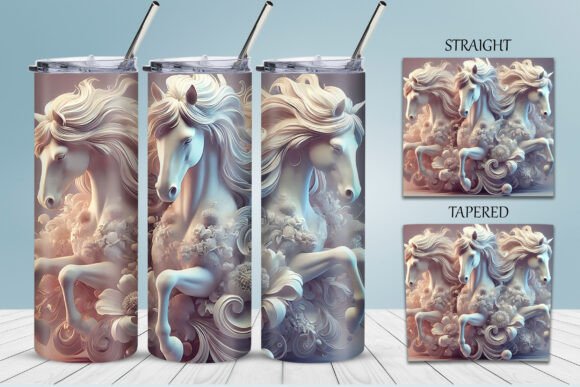
When investing in digital design assets, technical compatibility is paramount. The 3D White Horse Group Tumbler Wrap Design is delivered in formats that cater to various printing needs and software preferences. The listing includes two distinct PNG files: one straight and one tapered. This dual-format approach acknowledges the diversity of tumbler shapes available on the market. Straight tumblers require a rectangular wrap, while tapered tumblers need a design that accounts for the changing diameter from top to bottom. Providing both options ensures versatility, allowing creators to use the design across a wider range of products without needing to manipulate the file extensively themselves.
- File Format: PNG, which supports transparency and high-quality compression.
- Dimensions: 9.3 × 8.2 inches, translating to 2790 × 2460 pixels.
- Resolution: 300 DPI (dots per inch), the industry standard for crisp, clear printing.
The high resolution of 300 DPI is particularly important for sublimation printing, where image clarity directly impacts the perceived quality of the final product. At 2790 × 2460 pixels, the design retains sharpness even when viewed up close, ensuring that the intricate details of the white horse group are rendered accurately. Furthermore, the note that sizes are approximate and can be scaled slightly up or down provides flexibility for users working with non-standard tumbler sizes, although maintaining the aspect ratio is recommended to prevent distortion.
Navigating Color Accuracy and Digital Expectations
One of the inherent challenges in digital design sales is managing customer expectations regarding color fidelity. The listing explicitly states that colors may vary slightly due to screen differences. This is a critical piece of information for buyers who may be accustomed to seeing vibrant, backlit images on their monitors. Sublimation printing involves transferring dye onto materials using heat, a process that can subtly alter hues depending on the substrate, printer profile, and heat press settings. By setting this expectation upfront, the seller promotes transparency and reduces the likelihood of disputes.
Additionally, it is important to note that mockups and photos are for demonstration purposes only and are not included in the download. This distinction clarifies that the purchase is strictly for the digital design file, not the physical tumbler or the promotional imagery seen in the listing. For new creators, this serves as a reminder to invest in their own photography or mockup tools to effectively market their finished products. Understanding these boundaries helps streamline the transaction process and ensures that buyers know exactly what they are receiving.
Legal Considerations and Ethical Usage
The digital marketplace is increasingly focused on intellectual property rights, especially concerning AI-generated content. The listing includes a clear disclaimer stating that the design is AI-generated and that any similarities to copyrighted material are purely coincidental. It also offers a mechanism for removal if such issues arise. This proactive stance reflects a growing awareness of legal complexities in the AI art space. For buyers, this provides a layer of security, indicating that the seller is responsive and willing to address potential concerns.
However, users should still exercise due diligence. While the seller provides this assurance, it is advisable for businesses to understand their own liability when selling printed goods. Using unique, refined designs like the 3D White Horse Group Tumbler Wrap Design minimizes risk compared to using generic, unedited AI outputs. The human refinement process adds a layer of originality that can help differentiate the work from mass-produced alternatives. This aligns with broader market preferences for authentic, curated content over purely automated creations.
Integrating the Design into Modern Workflows
For professionals integrating this design into their business, the workflow is straightforward. After downloading the digital file, users can import the PNG into their preferred design software. Whether using Canva, Adobe Illustrator, or specialized sublimation software, the high-resolution PNG ensures easy manipulation. Creators can add text, logos, or other graphical elements to customize the wrap further, making it suitable for branded merchandise or personalized gifts.
The versatility of the white horse motif allows it to fit various aesthetic themes, from rustic and western to modern and minimalist. This adaptability makes it a valuable addition to a designer’s library. By offering a design that is both trendy and timeless, the seller caters to a broad audience. The group composition of the horses adds depth and narrative to the image, inviting viewers to look closer and appreciate the details. This emotional engagement is key to driving sales in the competitive custom print market.
Conclusion: A Strategic Asset for Creators
The 3D White Horse Group Tumbler Wrap Design exemplifies the best practices of modern digital asset creation. By leveraging AI for initial concept generation and applying rigorous human editing for refinement, it delivers a product that is both innovative and reliable. The inclusion of multiple file formats, high-resolution specifications, and clear usage guidelines supports a seamless user experience. For creators looking to expand their product offerings with high-quality, visually engaging designs, this asset represents a strategic investment. It reflects the ongoing shift towards hybrid creative workflows and underscores the importance of technical precision in digital printing. As the market continues to evolve, such well-crafted, transparently sold digital goods will remain essential tools for success in the custom merchandise industry.