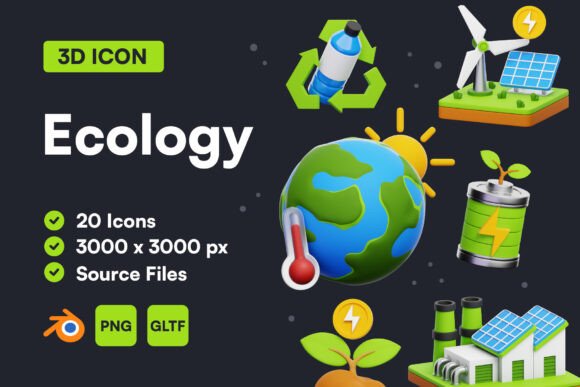
Ecology 3D Icon Set: Elevating Sustainable Design with High-Quality Visuals
In the rapidly evolving landscape of digital design, the demand for visual assets that communicate complex values instantly has never been higher. As brands pivot toward sustainability and environmental responsibility, their user interfaces must reflect this shift authentically. This is where the Ecology 3D Icon Set becomes an indispensable resource for modern designers. It is not merely a collection of images; it is a strategic tool designed to bridge the gap between aesthetic appeal and meaningful communication. By integrating high-resolution, three-dimensional elements into your workflow, you can transform standard user experiences into immersive, engaging interactions that resonate with eco-conscious audiences.
The Challenge of Modern Eco-Friendly Design
Designers today face a unique paradox. On one hand, there is immense pressure to create clean, minimalist interfaces that load quickly and function seamlessly. On the other hand, flat design often struggles to convey the warmth, tangibility, and urgency associated with environmental causes. Standard two-dimensional icons can feel sterile or generic, failing to capture the organic textures and depth inherent in nature. When a user encounters a "recycle" button or a "carbon footprint" tracker, the visual cue needs to do more than just label the function; it needs to evoke a feeling of care, growth, and vitality.
Many design teams struggle to find assets that strike this balance. Stock libraries are often saturated with low-quality renders or overly cartoonish illustrations that undermine professional credibility. Creating custom 3D assets from scratch is time-consuming and requires specialized skills in modeling, lighting, and rendering that not every UI/UX designer possesses. This creates a bottleneck in the design process, forcing teams to compromise on visual quality or miss deadlines. The need for a ready-to-use, high-fidelity solution is critical for projects ranging from mobile applications for smart energy monitoring to corporate sustainability reports.
How the Ecology 3D Icon Set Solves Design Bottlenecks
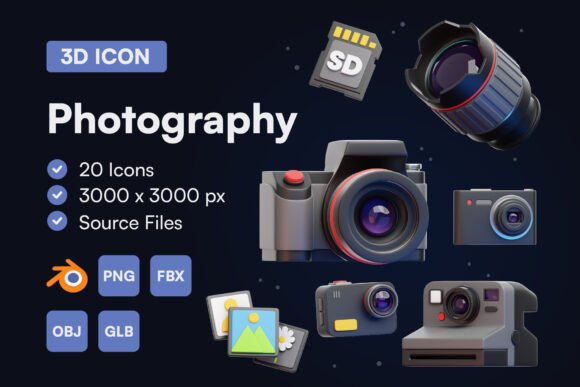
The Ecology 3D Icon Set addresses these challenges by providing a curated collection of twenty meticulously crafted icons that are ready for immediate implementation. Rather than spending days modeling a wind turbine or a leaf, designers can leverage this set to maintain momentum while ensuring top-tier visual standards. Each icon is rendered at a high resolution of 3000 x 3000 pixels, ensuring that they remain crisp and detailed whether used in a small mobile interface element or a large-scale web banner.
What sets this collection apart is its versatility in file formats. The inclusion of transparent PNG files allows for drag-and-drop simplicity for web designers and marketers who need quick assets without worrying about background removal. For those requiring deeper integration, the GLTF files offer lightweight, web-ready 3D models that can be implemented directly into interactive websites using modern web technologies. Furthermore, the provision of source BLEND files empowers advanced users to tweak lighting, angles, or materials, ensuring the icons align perfectly with specific brand guidelines. This flexibility means the Ecology 3D Icon Set is not a rigid product but a adaptable foundation for creative expression.
Practical Applications Across Industries
The utility of these icons extends far beyond simple decoration. In the realm of UI/UX design, these 3D elements can serve as focal points in onboarding screens, guiding users through features related to energy savings or waste reduction. The depth and shadowing in 3D icons provide natural affordances, subtly indicating interactivity and improving usability. For example, a 3D-rendered solar panel icon can act as a toggle switch in a smart home app, providing immediate visual feedback that feels tactile and responsive.
In educational technology, these icons can help simplify complex ecological concepts for students. A visually appealing 3D representation of a water cycle or a recycling loop can enhance comprehension and retention compared to text-heavy explanations. Similarly, in e-commerce platforms focusing on sustainable goods, using the Ecology 3D Icon Set to highlight product features—such as biodegradable packaging or ethical sourcing—can build trust and influence purchasing decisions. The professional polish of high-resolution 3D art signals quality and attention to detail, reinforcing the brand’s commitment to excellence.
Tailoring the Approach for Different Users
Different professionals will approach the Ecology 3D Icon Set with varying goals, and its structure supports this diversity. For a graphic designer working on a static presentation or social media campaign, the transparent PNGs are the primary value proposition. They allow for rapid composition in tools like Photoshop or Canva, enabling the creation of eye-catching visuals without technical overhead. The high resolution ensures that these assets look premium even when scaled up for print materials or large digital displays.
Conversely, a front-end developer or interactive designer might focus on the GLTF files. These formats are optimized for real-time rendering on the web, allowing for the creation of dynamic experiences where icons rotate, animate, or react to user input. This capability is crucial for next-generation websites that aim to impress visitors with immersive storytelling. Meanwhile, a 3D artist might utilize the source BLEND files as a starting point for further customization. They can adjust the color palette to match a specific corporate identity or modify the geometry to create variant icons, saving hours of initial modeling work.
Maximizing Impact with Strategic Implementation
To get the most out of the Ecology 3D Icon Set, it is essential to consider the context in which these icons are used. Consistency is key; mixing 3D icons with flat, 2D elements can create visual dissonance unless done with deliberate stylistic intent. It is recommended to use these icons as accent pieces rather than overwhelming the interface. For instance, using a single 3D icon to highlight a primary call-to-action can draw the eye effectively without cluttering the screen.
Lighting and color harmony also play a significant role. Since the icons are pre-rendered with specific lighting conditions, ensure that the background colors of your design complement the shadows and highlights of the 3D objects. Neutral or soft pastel backgrounds often work best to let the vibrant greens and earth tones of the ecology icons stand out. Additionally, consider accessibility. While 3D icons are visually striking, always pair them with clear text labels or aria-labels in code to ensure that users with visual impairments can still navigate your content effectively.
Future-Proofing Your Design Assets
Investing in high-quality assets like the Ecology 3D Icon Set is a forward-thinking strategy. As display technologies improve and screens become higher density, the demand for high-resolution graphics will only increase. The 3000 x 3000 px resolution ensures longevity, meaning these assets will remain relevant and sharp for years to come. Moreover, as the web moves toward more immersive experiences with WebGL and AR/VR integrations, having access to GLTF and source files positions your team to adapt quickly to new trends without starting from zero.
Ultimately, the goal of any design project is to communicate effectively and engage the audience. The Ecology 3D Icon Set provides the tools to do just that, blending artistic quality with practical functionality. Whether you are building a non-profit website, a green tech startup app, or an educational platform, these icons offer a unique and eye-catching element that elevates the overall design. By choosing resources that prioritize both aesthetics and usability, you demonstrate a commitment to quality that users notice and appreciate. Embrace the depth and detail of 3D design to make your environmental message not just seen, but felt.