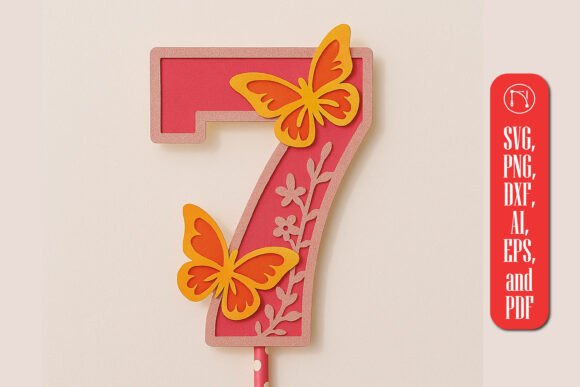
Mastering the 3D Butterfly Number 7 Topper SVG for Flawless Paper Crafts
There is a distinct satisfaction in watching a flat sheet of cardstock transform into a dimensional piece of art. When you are preparing for a milestone celebration, such as a seventh birthday, the details matter immensely. The 3D Butterfly Number 7 Topper SVG offers a sophisticated way to elevate your decor, combining layered butterfly wings with intricate floral lace designs. However, moving from a digital file to a physical masterpiece requires more than just hitting "cut." Many crafters encounter avoidable hurdles that compromise the final look of their projects. Understanding the nuances of this specific design can save you time, material, and frustration.
Understanding the Complexity of Layered Designs
This particular design is not a simple single-layer cutout. It features up to five layered components that work together to create depth and shadow. For beginners, the allure of a 3D effect can sometimes overshadow the technical requirements needed to achieve it. A common misunderstanding is assuming that all SVG files behave the same way across different machines. In reality, a file optimized for a Cricut may require slight adjustments when used in Silhouette Studio or Brother ScanNCut software.
The intricate floral lace elements are beautiful but delicate. If you rush the cutting process or use dull blades, these fine lines can tear or fail to weed properly. This often leads to a fragmented final product that looks messy rather than elegant. To avoid this, always perform a test cut on a small section of the lace detail before committing to your final premium cardstock. This simple step ensures your machine settings are calibrated correctly for the complexity of the design.
Selecting the Right Materials for Structural Integrity
One of the most frequent mistakes creators make is choosing paper based solely on color rather than weight and texture. The 3D Butterfly Number 7 Topper SVG relies on the stiffness of the material to hold its shape. Using standard printer paper or lightweight scrapbook paper will result in a droopy topper that lacks the intended architectural presence. Conversely, using cardboard that is too thick may prevent the layers from adhering smoothly, creating bulky seams that detract from the delicate lace aesthetic.
Ideally, you should select cardstock between 65lb and 80lb cover weight. This range provides enough rigidity to support the layered wings while remaining flexible enough for clean folding and gluing. If you are creating a shadow box frame, you might opt for slightly heavier stock for the base layer, but keep the upper decorative layers lighter to maintain visual balance. Always check the grain direction of your paper; cutting against the grain can cause warping over time, especially if the project is exposed to humidity during an outdoor party.
Navigating File Formats and Software Compatibility
When you download this design, you receive multiple file formats: SVG, PNG, DXF, AI, EPS, and PDF. A prevalent error among new users is attempting to use the PNG file for cutting. While PNGs are useful for printing or sublimation, they are raster images and do not contain the vector paths necessary for precise cutting machines. Always prioritize the SVG file for Cricut Design Space or the DXF file for Silhouette users who do not have the Business Edition upgrade.
Another overlooked detail is the organization of layers within the file. The 3D Butterfly Number 7 Topper SVG comes with clean layers designed for simple cutting, but software updates can sometimes alter how these layers are interpreted. Before cutting, ungroup the elements in your software and verify that each layer corresponds to the correct color or material. Misaligned layers can result in shadows falling in the wrong places, breaking the illusion of depth. Take a moment to digitally preview the assembly to ensure the floral lace aligns perfectly with the butterfly wings.
Precision in Assembly and Adhesion
Cutting is only half the battle; assembly is where the magic happens. Many crafters make the mistake of using wet glue sticks or heavy liquid adhesives for these intricate layers. Wet adhesives can warp thin paper and take too long to dry, causing slippage. Instead, use double-sided tape runners or precision tip liquid glue applied sparingly. For the smallest lace details, a toothpick can help apply adhesive without creating messy blobs that seep out from the edges.
Patience is crucial during the layering process. Start from the bottom layer and work your way up, ensuring each piece is completely dry and secure before adding the next. If you rush, the cumulative weight of the upper layers can dislodge the lower ones. Consider using tweezers to handle the delicate butterfly wing tips. This prevents oils from your fingers from transferring to the paper, which can cause discoloration over time, particularly on lighter colors.
Maximizing Versatility Beyond Cake Toppers
While this design is marketed as a cake topper, limiting it to this single use is a missed opportunity. The 3:2 image ratio and shadow box–friendly layout make it ideal for framed wall art, greeting cards, and scrapbooking layouts. A common oversight is failing to scale the design appropriately for different applications. A cake topper needs to be sturdy and relatively small, whereas a wall art piece can be enlarged significantly.
If you plan to use this for a large framed piece, consider using a foam core board for the backing to provide additional support. For scrapbooking, you might flatten the design slightly by reducing the number of spacer layers, allowing it to fit within album pages without bulging. Adapting the design to your specific medium ensures it remains functional and aesthetically pleasing, regardless of the project type.
Final Checks Before You Cut
Before you send your job to the cutter, review your workspace and tools. Ensure your cutting mat is clean and has adequate stickiness to hold the paper in place during intricate cuts. A slipping mat is a primary cause of misaligned cuts in detailed designs like this one. Additionally, verify that your blade is sharp. Dull blades drag through paper rather than slicing it, leading to frayed edges that are difficult to clean up.
By paying attention to these details, you transform a simple digital download into a professional-quality keepsake. The 3D Butterfly Number 7 Topper SVG is a powerful tool for creators, but its potential is only realized through careful preparation and execution. Whether you are a hobbyist making a gift for a loved one or a small business owner fulfilling client orders, mastering these techniques will enhance your efficiency and the quality of your final products. Craft it, cut it, and celebrate in style, knowing you have avoided the common pitfalls that plague many paper crafting projects.