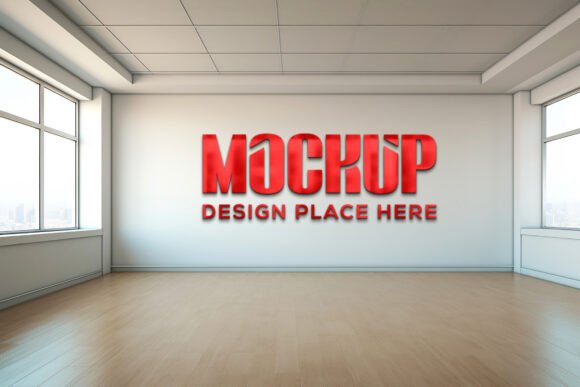
Streamlining Brand Presentations with a 3D Indoor Wall Logo Mockup PSD Design
In the competitive landscape of modern branding, the gap between a digital concept and a physical reality is often where client approval is won or lost. Designers, marketers, and small business owners frequently struggle to convey how a flat logo will translate into a tangible, three-dimensional space. This is where a 3d Indoor Wall Logo Mockup Psd Design becomes an indispensable asset in your creative toolkit. It is not merely a graphic file; it is a bridge between abstract design and perceived reality, allowing stakeholders to visualize the final outcome with striking accuracy before any physical production begins.
Integrating high-quality mockups into your workflow transforms the presentation phase from a speculative discussion into a confident demonstration. By utilizing a tool that automatically applies correct shadows, lighting, and perspective, you eliminate the hours typically spent manually adjusting layers to mimic realism. This efficiency allows professionals to focus on strategic brand alignment rather than technical rendering hurdles.
The Role of Realistic Visualization in Client Workflows
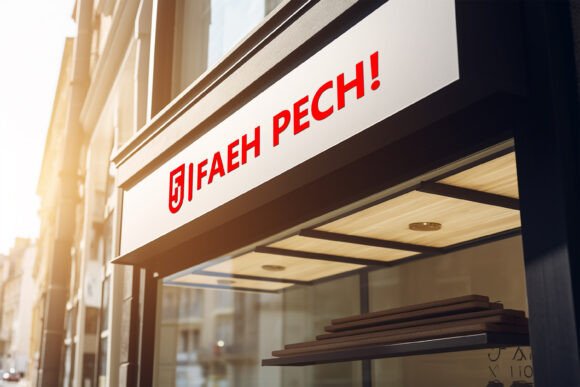
When presenting a new identity system, context is everything. A logo displayed on a white background lacks the environmental cues that help clients understand scale, material, and impact. A 3d Indoor Wall Logo Mockup Psd Design places your work in a curated environment, such as a modern office lobby, a retail storefront, or a minimalist gallery wall. This contextualization helps clients make informed decisions because they can see how the design interacts with light and space.
For freelancers and agencies, this visual fidelity serves as a powerful persuasion tool. It reduces the cognitive load on the client, who no longer has to imagine how the sign will look. Instead, they see a near-photorealistic representation. This clarity often accelerates the approval process, reducing the number of revision rounds caused by misunderstandings about scale or finish. The mockup acts as a single source of truth for the visual expectation, aligning the designer’s intent with the client’s perception.
Technical Efficiency Through Smart Object Integration
The core value of a well-constructed mockup lies in its usability. High-quality templates leverage Photoshop’s Smart Object technology to streamline the editing process. With a 3d Indoor Wall Logo Mockup Psd Design, you do not need advanced 3D modeling skills or extensive knowledge of lighting engines. The complex work of calculating reflections, ambient occlusion, and perspective distortion has already been done by the template creator.
To implement this in your workflow, you simply open the provided PSD file and locate the designated Smart Object layer. Double-clicking this layer opens a separate document where you can paste your vector logo or text. Upon saving and closing this sub-document, the main file automatically updates. Your design is instantly mapped onto the 3D surface, complete with realistic shadows and highlights. This "no skill requirement" approach ensures that even those with basic Photoshop proficiency can produce professional-grade visuals.
This automation is crucial for maintaining consistency across multiple projects. Whether you are creating a portfolio piece or a client pitch, the uniform quality of the mockup ensures that your presentation looks polished and cohesive. It removes the variability of manual editing, where one might accidentally misalign a shadow or mismatch a light source, thereby preserving the integrity of your professional output.
Enhancing Portfolio Quality and Marketing Materials
Beyond client presentations, these mockups are vital for personal branding and marketing. For designers building their portfolios, the difference between a flat JPEG of a logo and a rendered 3D wall sign can be significant. The latter demonstrates an understanding of spatial design and materiality, qualities that high-end clients and employers value. Using a 3d Indoor Wall Logo Mockup Psd Design allows you to showcase your work in a lifestyle context, making your portfolio more engaging and memorable.
Marketers and social media managers also benefit from these assets. When announcing a rebrand or a new office opening, realistic visuals generate higher engagement than standard graphics. They tell a story of establishment and permanence. By integrating these mockups into your content calendar, you can create a narrative around your brand’s physical presence, even if the actual signage is still in production. This pre-visualization builds anticipation and provides shareable content that looks authentic and high-budget.
Quality Control and File Organization
A professional workflow relies on organization and reliability. A premium mockup pack should offer fully layered and well-organized files. When evaluating a 3d Indoor Wall Logo Mockup Psd Design, look for clear folder structures that separate background elements, lighting adjustments, and the main design area. This organization allows for deeper customization if needed. For instance, you might want to adjust the color temperature of the room lighting to better match your brand’s mood or tweak the contrast of the shadows for specific printing requirements.
Resolution is another critical factor. Ensure the mockup is provided at 300 DPI. This high resolution guarantees that the final image remains crisp and detailed, even when viewed on large screens or printed in high-quality lookbooks. Low-resolution assets can pixelate when scaled, undermining the professional appearance you are trying to achieve. A 300 DPI file ensures that every texture, from the grain of the wall paint to the subtle sheen of the logo material, is rendered with precision.
Furthermore, the versatility of the file format matters. While the primary working file is a PSD, having a high-quality JPG preview included in the pack allows for quick reference and easy sharing with team members who may not have Photoshop installed. This dual-format approach supports collaborative workflows where speed and accessibility are paramount.
Practical Implementation Tips for Best Results
To get the most out of your mockup, consider the following practical steps during implementation:
- Use Vector Assets: Always place vector versions of your logo into the Smart Object. This ensures that the edges remain sharp regardless of the scaling required by the 3D perspective.
- Check Color Profiles: Verify that your document color profile matches your intended output (usually sRGB for web or CMYK for print). This prevents color shifts when the mockup renders the final image.
- Adjust Lighting Subtly: While the automatic lighting is excellent, don’t hesitate to use adjustment layers to fine-tune the brightness or saturation. Sometimes, a slight increase in contrast can make the logo pop more effectively against the wall texture.
- Maintain Layer Integrity: Avoid flattening layers until the final export. Keeping layers intact allows you to return and make changes quickly if the client requests a variation.
By treating the mockup as a dynamic component of your design process rather than a static image, you unlock its full potential. It becomes a flexible tool that adapts to your needs, whether you are refining a concept or finalizing a pitch.
Long-Term Value in Your Creative Toolkit
Investing in a high-quality 3d Indoor Wall Logo Mockup Psd Design is a decision that pays dividends over time. Unlike custom 3D rendering, which can take hours per project, a mockup template can be reused indefinitely for different clients and brands. It standardizes the quality of your visual outputs and reduces the time spent on repetitive tasks. This efficiency frees up resources for more strategic activities, such as concept development and client communication.
Moreover, having a reliable set of mockups builds a consistent visual language for your agency or freelance practice. Clients begin to recognize the quality and style of your presentations, reinforcing your brand identity as a professional and detail-oriented partner. In a market where first impressions are critical, the ability to present ideas with clarity and realism is a significant competitive advantage.
Ultimately, the goal is to communicate your design vision as effectively as possible. A well-executed mockup does not just show what a logo looks like; it shows what it feels like to experience that brand in the real world. By integrating these tools into your routine, you elevate your work from simple graphic design to comprehensive brand storytelling.