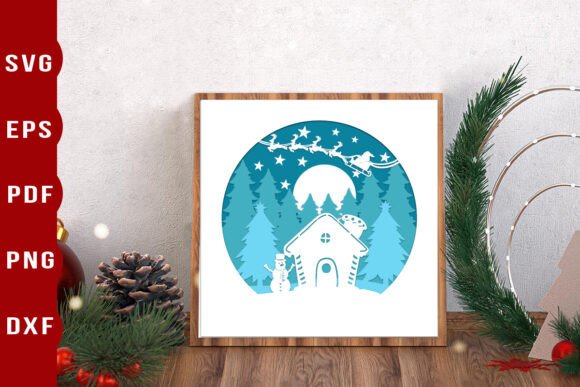
Integrating the Christmas House Shadow Box into Your Creative Workflow
The holiday season often brings a surge of creative demand, whether you are a small business owner preparing inventory, an educator planning classroom activities, or a hobbyist looking to personalize your home decor. In this high-pressure environment, efficiency and quality control are paramount. This is where digital assets like the Christmas House Shadow Box become more than just decorative files; they serve as foundational components in a streamlined production process. By utilizing a pre-designed 3D House Shadow Box SVG, creators can bypass the time-consuming initial design phase and focus immediately on execution, material selection, and finishing techniques.
Understanding how to integrate these digital cut files into your existing workflow requires a shift in perspective. Instead of viewing them merely as images to be printed, consider them as technical blueprints for layered paper engineering. The value lies not just in the aesthetic outcome, but in the reliability of the file structure, the compatibility with various cutting machines, and the scalability of the design for different project scopes.
Preparation and File Compatibility
Before any physical material is touched, the digital preparation stage sets the tone for the entire project. The Christmas House Shadow Box package typically includes multiple file formats, each serving a specific function within different software ecosystems. For users operating within vector-based design programs like Adobe Illustrator or CorelDRAW, the AI and EPS files provide editable paths that allow for precise adjustments. If you need to resize the default 9x9 inch dimensions to fit a larger frame or a smaller ornament, vector files ensure that the lines remain crisp and the cut paths stay accurate regardless of scaling.
For those using browser-based or entry-level design software, the SVG format is the industry standard. It preserves layer information, which is critical for shadow box projects where depth is created through stacking. When importing an SVG into platforms like Cricut Design Space or Silhouette Studio, the software recognizes separate layers, allowing you to assign different colors or cut settings to each tier of the house. This eliminates the manual labor of separating elements, a step that can introduce errors and inconsistencies in mass production scenarios.
Additionally, the inclusion of PNG and JPG files at 300 DPI resolution offers a quick preview capability. These raster images are useful for creating mockups for online listings, social media promotions, or client approvals before committing to physical production. Having these visual assets ready accelerates the marketing side of the workflow, allowing entrepreneurs to list products or share project ideas while the physical crafting is still in the planning phase.
Material Selection and Machine Setup
Once the digital files are prepared, the next phase involves translating the virtual design into physical reality. The success of a 3D shadow box relies heavily on the interaction between the cut file and the chosen material. Cardstock weight is a primary variable. Lighter paper (65-80 lb) may curl or fail to hold the structural integrity required for the layered effect, while heavier cardstock (110 lb or higher) provides rigidity but may require deeper blade pressure and slower cutting speeds.
When working with laser cutters, the DXF and PDF formats included in the archive are particularly valuable. Laser machines interpret vector lines differently than blade cutters, often requiring specific line weights and color codes to distinguish between cut lines and engrave areas. The high-resolution nature of the provided files ensures that intricate details, such as window panes or roof textures, are rendered accurately without jagged edges. This precision is essential for maintaining the professional appearance of the final product, especially if these items are intended for sale or gifting.
Efficiency in this stage comes from batch processing. Since the Christmas House Shadow Box design is optimized for standard cutting mats, users can nest multiple copies of the design on a single sheet of material. This reduces material waste and minimizes the number of machine runs required. For small business owners, calculating the yield per sheet helps in pricing strategies and inventory management, ensuring that each unit produced contributes positively to the bottom line.
Assembly and Structural Integrity
The assembly process is where the 2D cuts transform into a 3D object. This stage requires patience and attention to detail, but the workflow can be standardized to improve speed and consistency. Using foam tape or spacers between layers is the most common method for creating depth. The thickness of the spacer determines the shadow intensity and the overall dimension of the box. A consistent spacer thickness across all units ensures uniformity, which is crucial for brand consistency if you are producing these for a retail environment.
To streamline assembly, organize the cut pieces by layer before beginning. Labeling each tier from back to front prevents confusion, especially when working with complex designs that have many similar-looking elements. Some creators find it helpful to create a jig or template that aligns the layers perfectly, reducing the time spent measuring and adjusting each piece individually. This technique is particularly useful for educators managing classroom projects, where students may have varying levels of dexterity and attention to detail.
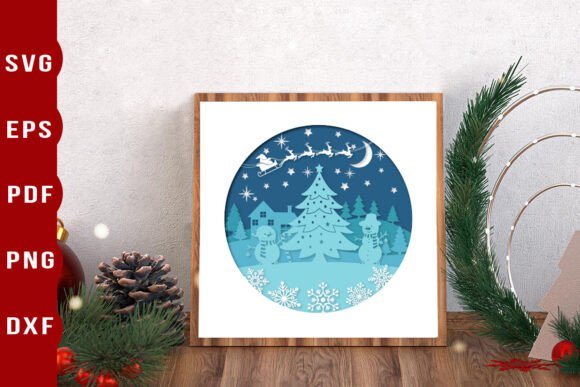
Lighting integration is another consideration that enhances the final output. Many shadow box designs are intended to be backlit. Planning for LED strip placement during the assembly phase ensures that wires are hidden and the light distribution is even. The black silhouette style of the Christmas House Shadow Box works exceptionally well with backlighting, as the contrast between the dark paper and the illuminated background creates a dramatic, festive atmosphere. This feature adds value to the final product, transforming it from a simple decoration into an interactive light fixture.
Scalability and Business Applications
For entrepreneurs and marketers, the versatility of the Christmas House Shadow Box allows for diverse product offerings. The same digital asset can be used to create framed wall art, greeting cards, gift tags, or even large-scale window displays. By adjusting the scale and material, you can cater to different market segments without needing to invest in new design resources. This scalability is a key advantage of using high-quality, multi-format digital files.
Furthermore, these assets support content creation workflows. Bloggers and social media influencers can document the making-of process, using the step-by-step nature of the assembly to create engaging tutorials. The visual appeal of the layered paper art performs well on visual platforms like Instagram and Pinterest, driving traffic to online stores or affiliate links. The professional quality of the 300 DPI files ensures that all promotional materials look polished and credible, reinforcing brand authority.
Long-term use of these files extends beyond the immediate holiday season. Archiving the project files, including notes on material settings and assembly times, builds a knowledge base for future seasons. You can experiment with color variations, such as winter whites or metallic accents, to refresh the design without altering the underlying structure. This iterative approach allows for continuous improvement and innovation, keeping your product line fresh and relevant year after year.
Quality Control and Final Presentation
The final step in the workflow is quality control. Inspect each unit for clean cuts, proper alignment, and secure adhesion. Any glue residues or misaligned layers should be corrected before packaging. For items intended as gifts or retail products, the packaging itself becomes part of the experience. Clear boxes or sturdy mailers protect the delicate paper layers during shipping, ensuring that the customer receives the product in pristine condition.
By treating the Christmas House Shadow Box as a component in a broader creative and business process, you maximize its value. It is not just a file download; it is a tool that supports efficiency, consistency, and creativity. Whether you are a freelancer looking to expand your service offerings, a teacher seeking engaging holiday projects, or a hobbyist aiming for professional results, integrating this asset into your workflow simplifies the path from concept to completion. The result is a high-quality, festive decoration that captures the magic of the season while respecting the practical demands of modern creation.